The First 72 Hours With a New Puppy: What Actually Matters
Forget the 40-item checklists. The first three days shape house-training, confidence and your sleep. Here's where to focus.
Doctor Paws is an educational brand — nothing here replaces in-person veterinary care. Full disclosure
Bringing a puppy home is equal parts joy and controlled chaos. Most new owners prepare by buying gear. The owners who have an easier first year prepare by understanding three clocks that start ticking the moment the puppy walks in.
Clock one: the socialization window
Puppies have a critical socialization period that largely closes around 12 to 16 weeks. What a puppy calmly experiences in that window — surfaces, sounds, strangers, handling, other vaccinated dogs — becomes "normal" for life. What it misses can become "scary" for life. This window is the single biggest influence on adult temperament, and it's short. Waiting until the full vaccine series is done to start all socialization is outdated advice; the modern approach balances disease risk with controlled early exposure.
Clock two: house-training
House-training is not a battle of wills; it's a math problem. A young puppy physically can't hold its bladder long — roughly one hour per month of age. Every accident inside is a data point the puppy logs about where bathrooms are. The owners who succeed fastest run tight supervision, scheduled trips out, and loud celebration for outdoor success. The ones who struggle are usually giving too much unsupervised freedom too early, then punishing accidents after the fact — which mostly teaches the puppy to hide.
Clock three: the vet schedule
Relative openness to novel people, surfaces and sounds by age — the case for starting early, safely.
Between 6 and 16 weeks, your puppy needs a specific sequence of vaccinations and deworming, timed so that maternal antibodies don't cancel out the shots. Miss the rhythm and you either leave gaps in protection or pay for repeats. Your first vet visit should happen within days of coming home — it's also your chance to have a professional check for congenital issues while any breeder or shelter guarantee is still fresh.
What about all the gear?
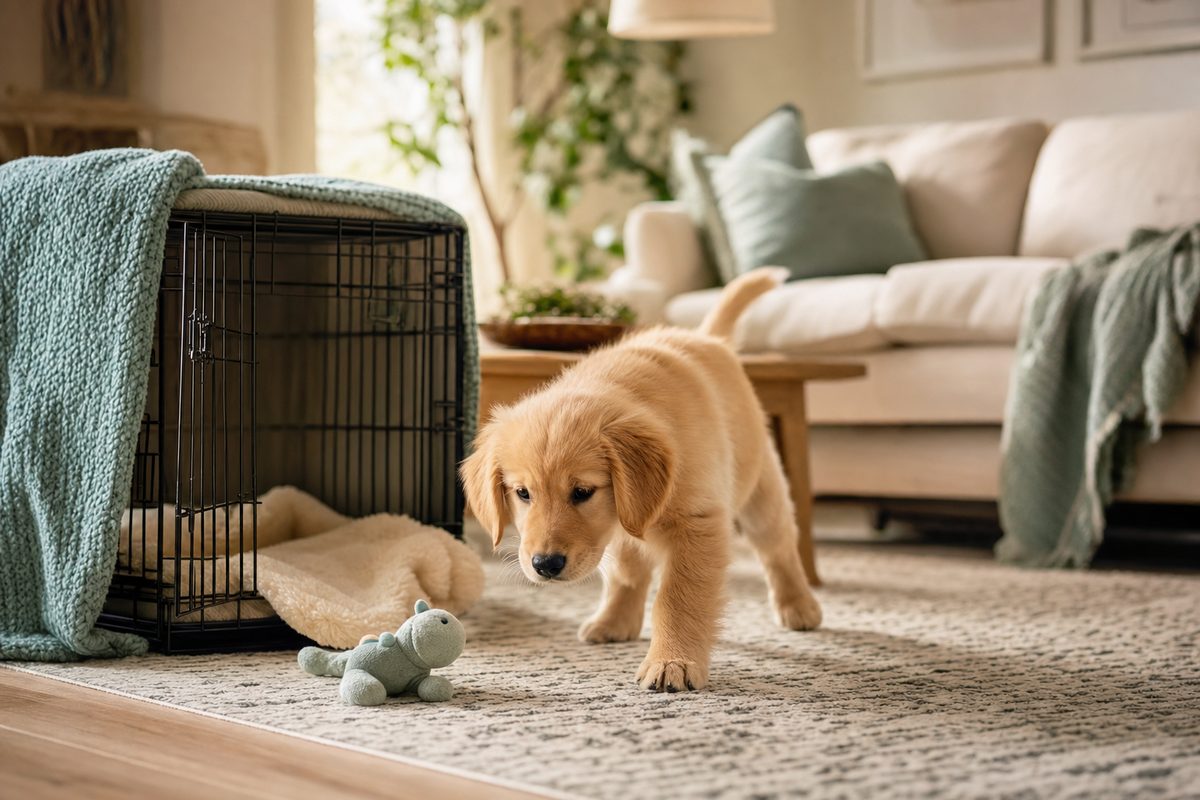
You need less than the pet store says: a crate that fits, a flat collar and lightweight leash, one good chew toy per room, food the breeder was already using (switch gradually later), and an enzymatic cleaner — because there will be accidents, and regular cleaners don't erase the smell that draws puppies back to the scene.
The first year of a dog's life is when a few small, well-timed decisions — about socialization, feeding, deworming, spay/neuter timing — pay off for the next decade. Knowing the whole first-year map before you're in the thick of it is what separates a smooth puppyhood from a stressful one.