
The Pet Store Is Organized Against You: Gear That Matters vs. Gear That Doesn't
Americans spend billions on pet products, and a surprising share of it does nothing — or quietly causes harm. A calmer way to shop for your pet.
Doctor Paws is an educational brand — nothing here replaces in-person veterinary care. Full disclosure
Walk into any pet superstore and you'll pass a thousand products before you find the five your pet actually needs. That's not an accident — the pet industry is superb at converting love into purchases. The problem isn't spending money on your pet; it's that some heavily-marketed products are useless, a few are harmful, and the genuinely important ones rarely get shelf-end displays.
The quiet harms
Some purchases actively work against you. Retractable leashes teach constant pulling and cause documented injuries to both ends of the leash. Cheap jerky and rawhide from unregulated supply chains have long FDA complaint histories. Flea products from the bargain bin can be dangerous — especially dog products near cats. And the wrong crate size or a poorly-fitted harness undermines the training you're trying to do with it.
The money pits
Then there's the merely useless tier: costumes your dog tolerates at best, fountains that go unwashed and grow biofilm, subscription boxes of toys a heavy chewer destroys in minutes, and "calming" products with no evidence behind them standing next to ones with quite good evidence — with nothing on the packaging to tell you which is which.
A sane budget allocation for a new-pet shop — notice what's missing from the shelf-end displays.
What actually earns its price
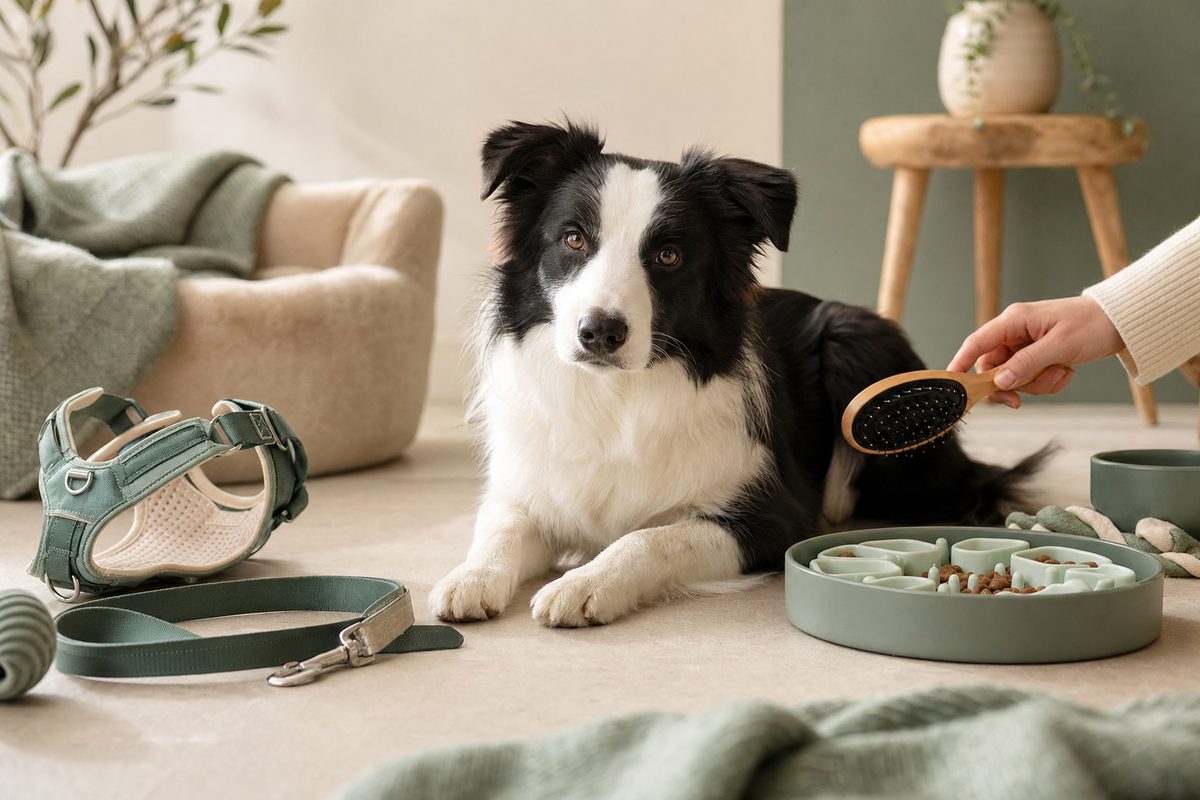
The pattern behind gear that vets and trainers consistently recommend: it solves a real, daily problem. A properly-fitted Y-front harness. One puzzle feeder that makes your fast-eating dog work. A toothbrush kit that actually gets used (dental disease is the most common disease in adult pets — this one item outperforms drawers of dental gimmicks). An enzymatic cleaner. A scratching post tall enough for a full stretch, placed where the cat actually lives, not hidden in the basement. A carrier a cat is trained to like before the vet day it's needed.
Buy once, cry once
The best gear strategy is unglamorous: fewer, better things, sized and fitted correctly, replaced when worn. Your pet doesn't want variety; it wants a predictable, comfortable world and your attention. The full gear guide walks category by category — what to buy, what to skip, and the fit details that make the difference — so the store's floor plan stops being the one making your decisions.